Susurrus Press Circa 2007 -2010
For a number of years this was the website for the Susurrus Press. In 2010 there was a notice that the Susurrus Magazine was going on a long term hiatus. The hiatus continued until the domain registration expired. The university's English Department became the new owner, and the archived version of the website is now required reading for Jeffrey Bame's Internet Literature course. Mr. Bame is also an expert on search engine optimization, famous for his work in ranking household cleaning supplies and products high in Google searches. He also has a degree in Elizabethan Literature from BU and has been the keynote speaker for numerous events promoting search topics related to the humanities.
Content is from the site's 2007 -2010 archived pages.
editors
James Maddox
Adicus Garton
Rev. Brian Worley
Susurrus Press News Updated March 17, 2010
Susurrus Press was established in June of 2005. Our two fiction periodicals, Atomjack and Susurrus Magazine, are currently on long-term hiatus, though archives will remain online, here, indefinitely. Chicago Overcoat, our second print anthology, is experiencing difficulties, updates will be here as we get them.
Our newest e-anthology, courtesy of Adicus Ryan Garton of Atomjack, is now online. Titled Butterfly Affects, it's an anthology of alternate futures. Neverlands and Otherwheres, our first print anthology, is still available for purchase, though we have less than 100 left.
Our Periodicals:
|
susurrus: the literature of madness On indefinite hiatus as we work on making print anthologies, this is the publication that started it all. Sheos lies. |
Though also now inactive, there are still more fantastic SF stories than you can shake a raygun at. |



Anthologies:
|
Butterfly Affects An alternate futures e-anthology edited by Adicus Ryan Garton of Atomjack. Free, downloadable. . |
Neverlands and Otherwheres It's been a long time coming, because wow, making books is a lot harder than we thought. Our first venture into print!
|


|
Chicago Overcoat Print Anthology. Coming... eventually. "Hardboiled detective meets _________."
|
I Am This Meat e-anthology A free online, downloadable, themed anthology. Nineteen stories about our battles and compromises with our bodies. |


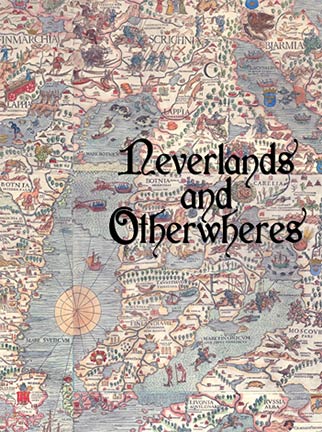
Now Available!
Susurrus Press’s first print anthology, Neverlands and Otherwheres, brings you thirteen stories showcasing some of the best in new literary fantasy and science fiction, slipstream, and genre-bending none-of-the-above.
From a boy who hangs the stars, to dinosaurs in a woman’s backyard, to a mad tea party; from whimsical to wistful and back again. This collection shows that there be dragons everywhere, and a land far, far away can be right under your nose.
Featuring the freshest new voices writing today, including A. H. Jennings, Jennifer Moore, Sylvia Kelso, John Weagly, Mercedes Murdock Yardley, Bruce Golden, Mark Lee Pearson, R. A. Gale, Patricia Russo, Maxwell James, Casey Fiesler, Lisa A. Koosis, and a novella by Kit St. Germain.
$6.95 + S&H. 233 pages. Trade paperback.
|
A print anthology, coming in late 2008. |
Submission Deadline: August 1st, 2008
Fill in the Blank: “Hard-boiled detective” meets ________. Now write it. But remember: You're not selling ideas, you're selling stories. So no matter how good of an idea "hard-boiled detective" meets "vegan zombie lesbians from Mars" may be, if you don't flesh out a great story, we'll pass. We like slipstream, cross-genre, surreal, humor, SF/Fantasy, and experimental. Elements of horror are fine, but we like "odd" a lot more than we like "shocking." |

More than anything, however, your story should focus on noir. Since the term Chicago Overcoat is taken straight from The Big Sleep, the stories of this anthology will be as new and adventurous as its inspiration material was back in the day. Also, we don't only want stories with surprise, twist, or fabricated/contrived/intricately labored endings. (In fact, we'll probably only take one or two of these, and we'll take them early.) Just make sure the feel is right. That's the most important thing.
Honestly, this will be a difficult anthology to get into. So two tips:
1. It really helps your chances if you know both genres that you're writing in. We can tell if you're just dabbling. It's good to branch out, but you've gotta put in the time before it pays off. You have to hit every genre cliché before you know to look out for it next time.
2. Make your characters real people. Real people have dentist appointments next month, talk on the phone, have pets, and they go out for lunch with friends. They have bad habits; they burn popcorn. And there's an entire range of emotions for them to experience. When they die, they leave all sorts of loose ends untied. But most importantly: They all have motivations for everything they do.
Fiction from 100 to 6,000 words, and we may publish one novella of 10,000 to 15,000 words.
No reprints.
Simultaneous subs okay.
Because you may not get a response until after the deadline, we accept multiple subs, up to four stories or 6,000 words, whichever comes first, OR, one novella length submission. Anything above this will be deleted unread. You should receive an automatic response letting you know that we received your e-mail, if you don't get this, please query.
Submissions go to James Maddox and Brian Worley, editors. Subject line like this (or our spam filters may eat it): COsub/Title/name (or COquery for questions).
Submit work in the body of the email, or attached as a rtf or doc to:
If your work is selected, we will purchase FNASR at the following rates:
$5 for flash (>1000 words)
$10 for short stories (1000 + words),
and $25 for a novella of <10,000.
Recommended Reading:
Raymond Chandler
Dashiell Hammett
Haruki Murakami
Steve Niles's Cal McDonald Mysteries
Paul Auster's New York Trilogy
Richard Stark
James M. Cain
Slylock Fox*
Frank Miller
Many Stephen King novellas (Shawshank, The Colorado Kid, ect.)
Nicholas Blincoe
Batman, man. Batman.
And many other Lone Wolf types.
*I was totally kidding about Slylock Fox**
**unless you can make it work.
I Am This Meat e-anthology
CIRCA 2007
CHANGED AGAIN! We will continue to respond to submissions as quickly as possible, but you may not hear from us until after the submission deadline. You may submit up to five works to a combined word limit of 6,000 words for this anthology. (I.e., if you have one 6,000-word story, that's your limit. If you have five 100-word stories, that's also your limit.)
LISTEN: We are looking for stories whose main point is one's struggle with one's body. The fact that your character has a body does not mean it is a good fit for this anthology. For example, your story should not be something that would be summed up as "boy meets girl", or "man vs machine", or "human exploring another dimension", or "person vs alternate personality". It should be something that you'd sum up as "person vs. his/her own body (or body part)". It can contain elements of the rest, but those should just be elements of the story, not the main plot. (It need not be a "battle" per se.) Read GLs below.
| Accepting submissions until: August 31, 2007 |
| (subject to change based on quality and number of submissions rec'd) |
To be human is to be constantly engaged in a battle between one's mind and one's body. Resisting the urges of one's glands, pitting logic against desire. Mind vs. meat.
Susurrus Press's first themed anthology will explore the struggle of what it means to have a body whose aims are different from one's mind. Whether it's a story about someone who believes his tongue is masterminding a conspiracy, to someone preoccupied with losing love handles, to someone whose hobby is getting tattoos and piercings, to someone angry because s/he can't stop blushing in public, we want your best fiction and poetry dealing with our struggles and uneasy alliances with our bodies.
About the format
I Am This Meat will be exclusively electronic. With electronic media, one can reach anyone in the world with internet access instantly. While we have nothing against print, we believe that electronic media offer more opportunities and wider audiences to both new and established writers. It's our intent to utilize as many electronic formats as possible: this anthology will be available online, and as a free e-book and audiobook download.
Guidelines
Fiction should be between fifty and 6,000 words. We want literary, humor, light horror, sociological SF, magical realism, and/or experimental, though that isn't an exclusive list. Our focus isn't on a specific style or genre, but on collecting extremely high quality fiction that fits the anthology's theme.
Poetry must be very exceptional. We prefer poetry that's narrative, but again, we're open to being surprised. Please spare us the I'm-a-depressed-vampire-who-loves-pain sort of poetry. Don't send anything to rival the Iliad in length. From one to fifty lines is probably a good ballpark figure.
Payment
Fiction >1,000 words..........$10.00
Fiction < 1,000 words.........$5.00
Poetry................................$5.00
CIRCA 2008
|
|
|
CIRCA 2007
Far Far Away (tenative title) will be a themed print anthology about the worlds that exist alongside our own, unseen, be they on the other side of the looking-glass, in virtual reality, or in the sewers under the city. We especially like slipstream or cross-genre. Also: humor, SF/Fantasy, experimental, and/or surreal. Stories without any element of genre may be considered if they do a fantastic job of making Mundania seem like a foreign world. Elements of horror are fine, but we'd rather you evoke a sense of wonder than dread.
Show us what exists just outside of the everyday, and turn what's under our noses into a land far, far away.
Guidelines
Deadline: February 29, 2008
No reprints.
Fiction from 100 to 6,000 words, and we may publish one novella of 10,000 to 15,000 words.
Submit work in the body of the email, or attached as a rtf, doc, or odt.
If your work is selected, we will purchase FNASR at the following rates:
| $10 for flash (<1000 words) $25 forshort stories (1000 + words), and $50 for a novella of >10,000. |
You will get an e-mail confirmation that we received your story, but you may not get your acceptance or rejection until after the submission deadline. To accomodate this, we will allow you to send up to four submissions to a total word count of 6,000 words (whichever comes first) OR one novella up to 15,000 words. Simultaneous subs okay, if marked as such, and please notify us as soon as you can it your story is accepted elsewhere.
Submissions go to Adicus R. Garton and Brian Worley, editors. Subject line like this (or our spam filters may eat it): FFAsub/Title/name (or FFAquery for questions).
Recommended Reading:
Jonathan Strange and Mr Norrell by Susanna Clark
Neverwhere by Neil Gaiman
Night Watch by Sergei Lukyanenko
Alice in Wonderland/Through the Looking Glass by Lewis Carroll
Otherland by Tad Williams
Journey to the Center of the Earth by Jules Verne
The Chronicles of Amber by Roger Zalazny
The Wonderful Wizard of Oz by L. Frank Baum
CIRCA 2008
Retitled from Far Far Away
Coming in August 2008.
5/29/08 Update: If you have not received a response by June first, that means your story has made it to the final round of selections. We have a small pool of excellent stories, but the space we have to fill is finite. We have some tough decisions to make. You'll be hearing from us shortly.
